Winter in Maine does not play fair. The freezing coastal gales whipping off Casco Bay will test every brick, joint, and flue in your home. If you own property in Portland, you already know the drill. Ice expands. Mortar cracks. Bricks spall. Before you realize it, that stately chimney on your West End Victorian is a massive structural liability. Ignoring the damage is not an option. Gravity always wins.
Protecting a historic or modern home in this climate requires a comprehensive approach. It takes more than a quick visual check from the driveway. You need a calculated combination of strategic demolition, precision tuckpointing, and rigorous maintenance. When you pair heavy masonry restoration with professional Chimney Sweep and Repair Services, you bulletproof your home against the Northeast's worst moods.

The One-Two Punch of Maine Weather on Your Masonry
The freeze-thaw cycle is a brutal, relentless enemy of masonry. Moisture sneaks into tiny hairline cracks during a wet autumn. Then January hits. The water freezes, expanding its volume by roughly nine percent. That intense pressure literally blows the face off the brick. We see this type of structural trauma constantly, from Munjoy Hill down to Deering Center.
When the salt air from the Atlantic joins the equation, deterioration accelerates rapidly. Salt crystals penetrate porous brickwork. As they dry and crystallize, they exert internal stress that pulverizes the masonry from the inside out. A chimney subjected to these forces for decades eventually reaches a breaking point where a surface patch simply will not hold.
Strategic Demolition: Knowing When to Say Goodbye
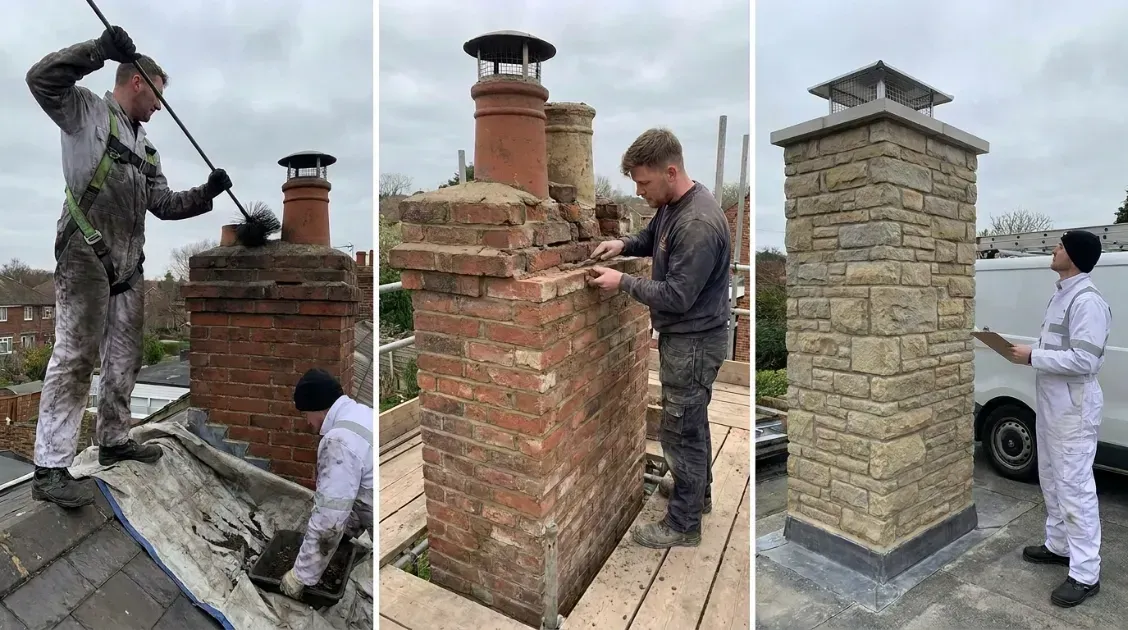
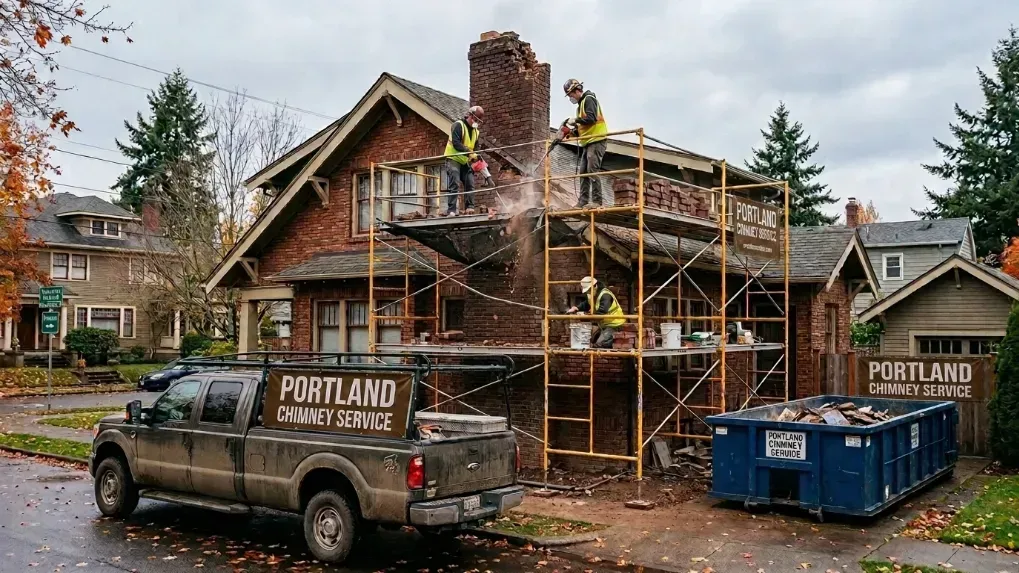
Sometimes, true preservation requires starting over. Strategic demolition sounds terrifying to the average homeowner. It shouldn't be. When a chimney crown is completely compromised or the upper stack is noticeably leaning, trying to patch the mortar is just throwing good money after bad. Precision demolition safely removes the dangerous, degraded masonry before a winter Nor'easter does the job for you.
This is not about swinging a wrecking ball. It is methodical, surgical deconstruction. Crews erect secure staging, protect your roof, and carefully dismantle the failing structure down to a solid, structurally sound baseline. Lead flashing is carefully removed or replaced. By stripping away the ruined top layer, we create a stable foundation to rebuild. It is the only way to guarantee the structural integrity of the stack.
Tuckpointing: The Art of Saving the Stack
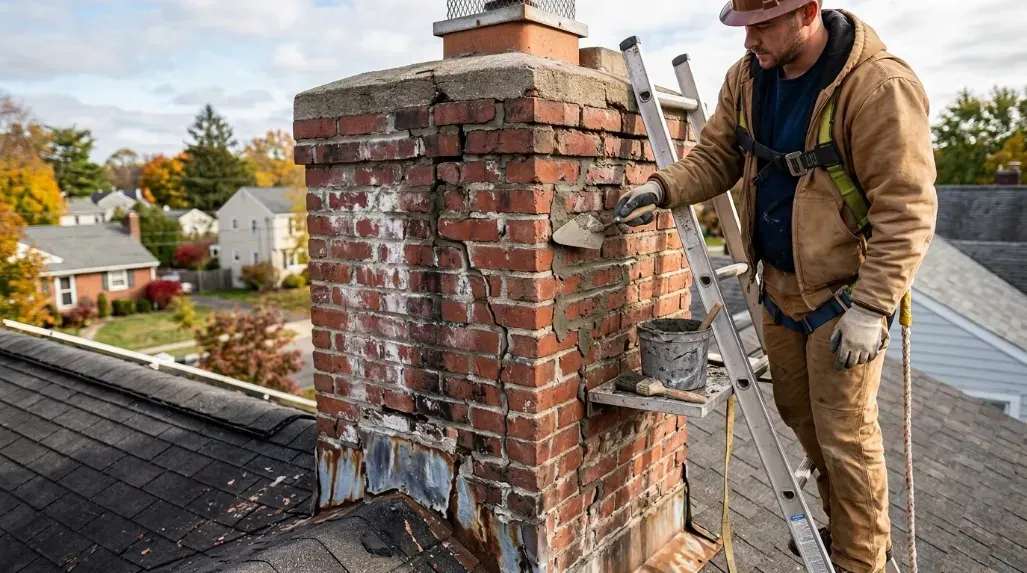
If the brick is sound but the joints are failing, you enter the revival stage: tuckpointing. Grinding out the old, crumbling mortar and replacing it with fresh, tightly packed compound is not just a cosmetic upgrade. It is structural life support. It stops water penetration dead in its tracks.
Historic Portland homes require specialized knowledge. You cannot just slap modern Portland cement into an 1890s chimney. Old bricks are softer. They need to flex and breathe. Modern cement is too rigid; it forces moisture into the brick itself, guaranteeing a blowout next winter. According to preservation guidelines from Historic New England, matching the mortar's compressive strength and vapor permeability to the original brick is non-negotiable. Proper tuckpointing restores the original strength of the chimney while retaining the historic aesthetic that makes Portland neighborhoods so valuable.
Why Chimney Sweep and Repair Services Aren’t Optional
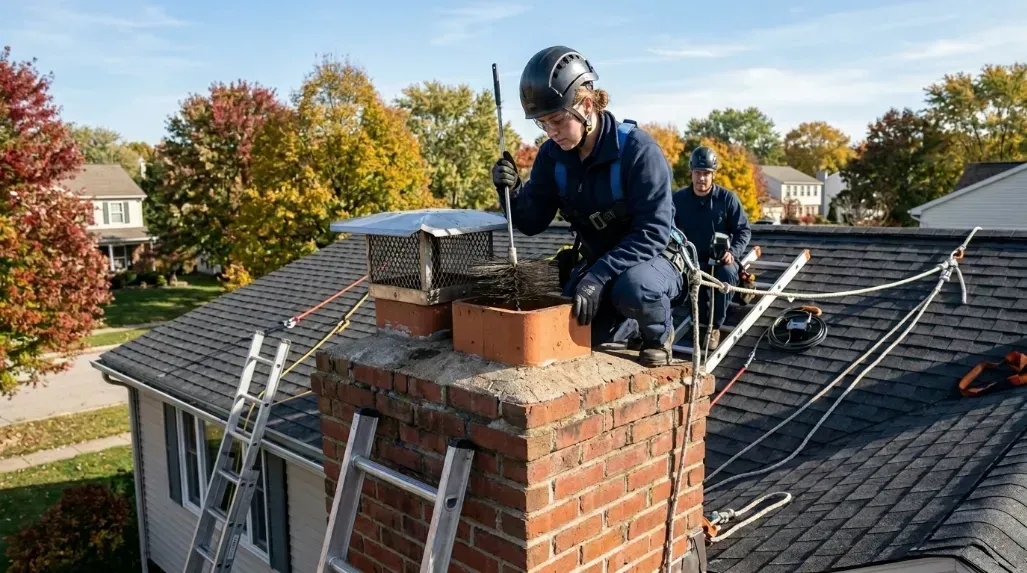
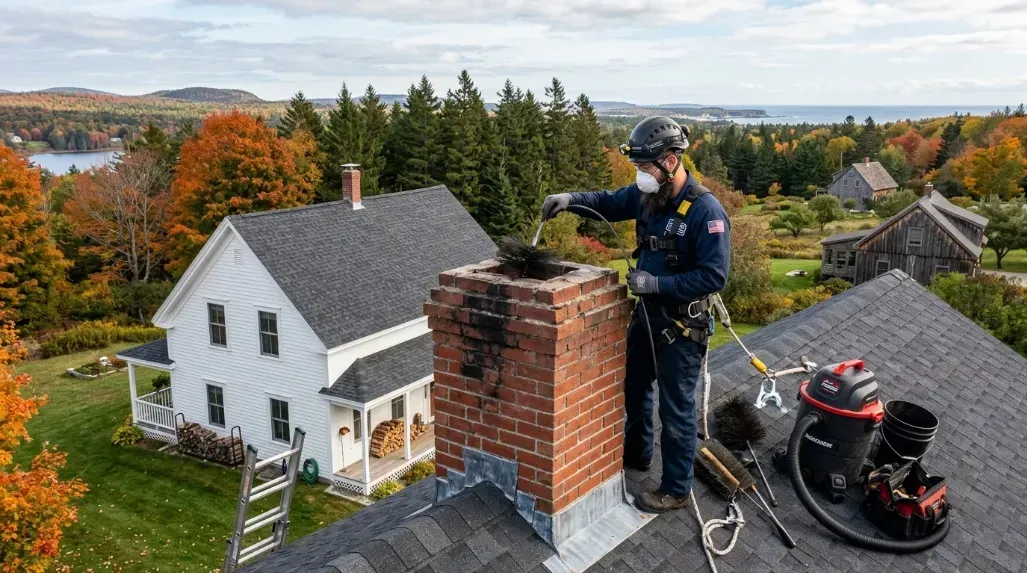
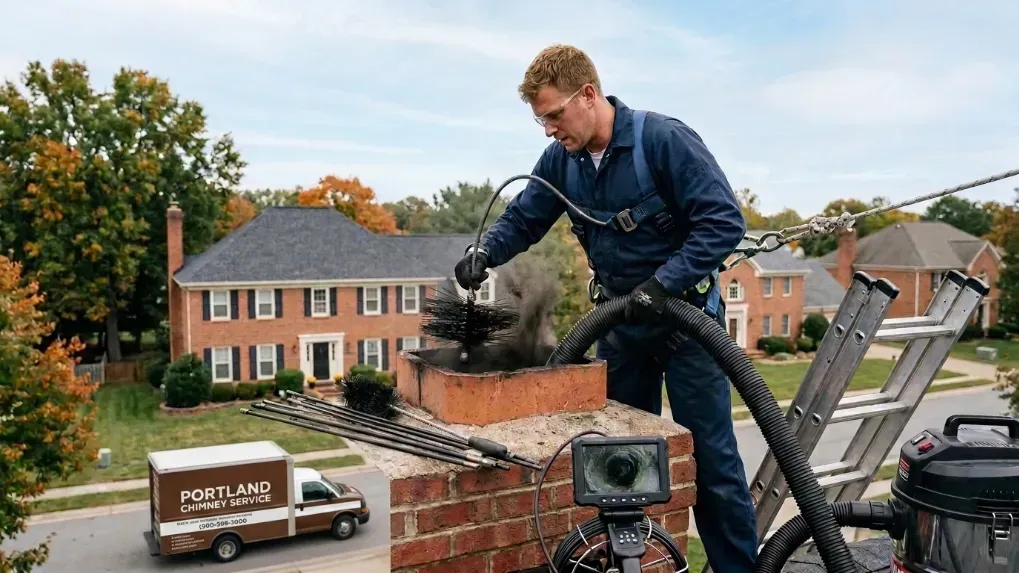
A beautiful, freshly tuckpointed chimney means absolutely nothing if it remains a severe fire hazard on the inside. This is where comprehensive Chimney Sweep and Repair Services come into play. Burning wood creates creosote. It is sticky, highly combustible, and inevitably builds up inside your flue.
Creosote develops in three stages. The first is a dusty soot. The second is a crunchy, flaky buildup. The third stage is a hard, glazed tar that is incredibly difficult to remove and highly explosive. The Chimney Safety Institute of America (CSIA) reports that even a minor eighth-of-an-inch buildup of creosote is enough to ignite a devastating chimney fire. You need a professional sweep to clear that out. A standard homeowner brush will not cut through third-degree glaze. It requires specialized rotary chains and chemical treatments.
But proper maintenance goes far beyond just running a brush down the flue. Expert repair services address the hidden, internal dangers. Rusted dampers. Cracked terracotta flue tiles. Water pooling on the smoke shelf. These hidden issues degrade your indoor air quality and threaten your family's safety. The EPA's Burn Wise program clearly notes that a damaged flue significantly decreases drafting efficiency. Instead of pulling smoke up and out, a compromised chimney pushes dangerous, carbon-monoxide-heavy particulates back into your living room.
Waterproofing: The Final Shield
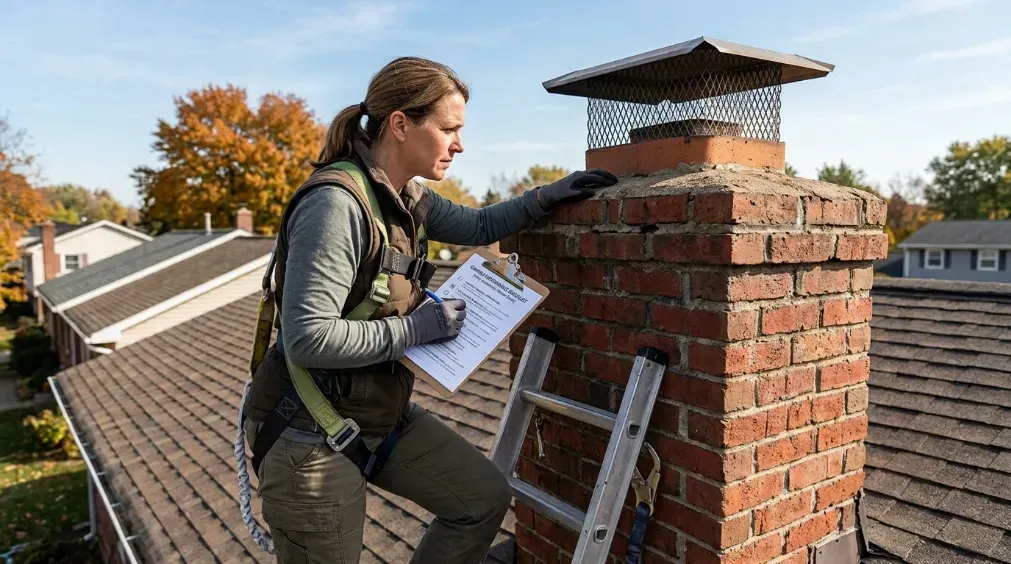
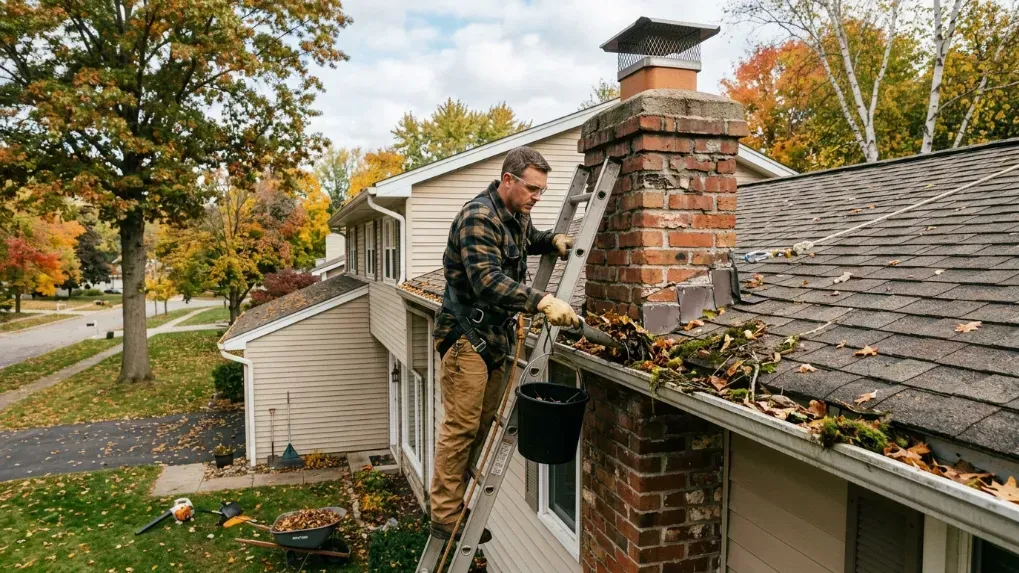
Let's talk about water. It is the silent killer of all things masonry. A single missing chimney cap or a cracked crown allows gallons of rain and snow directly into the internal system. The National Fire Protection Association (NFPA) mandates annual inspections precisely because internal water damage often remains entirely hidden until it causes a catastrophic structural failure.
Once the demolition is finished, the tuckpointing is cured, and the flue is swept, waterproofing is your final line of defense. Applying a professional-grade, vapor-permeable water repellent acts like a GORE-TEX jacket for your chimney. It allows the masonry to breathe moisture out, while stopping driving rain from pushing in. It drastically extends the lifespan of the repair work.
Portland Chimney Service: The Local Standard
You cannot trust high-stakes masonry work to a guy with an aluminum ladder and a bucket of cheap, big-box store mortar. Portland Chimney Service is the industry leader for a reason. We understand Maine weather intimately. We respect Portland's unique architectural history.
By combining surgical demolition, historically accurate tuckpointing, and rigorous chimney sweep and repair services, we do not just patch chimneys. We restore them. We make sure your draft is strong, your brickwork is sealed, and your home is safe from the threat of fire and collapse. Do not wait for a brick to fall on your driveway or a draft issue to smoke out your living room. Proactive maintenance is always cheaper than emergency reconstruction.
Frequently Asked Questions (FAQ)
How often should I schedule Chimney Sweep and Repair Services in Portland?
The NFPA recommends an annual chimney inspection and sweep. In Portland, ME, where heavy winter wood-burning is common, yearly sweeping removes dangerous creosote buildup, prevents chimney fires, and identifies freeze-thaw masonry damage before it causes structural failure.
What is tuckpointing and why does my chimney need it?
Tuckpointing is the process of routing out deteriorated, cracked mortar from brick joints and replacing it with fresh, structurally sound mortar. It restores the physical integrity of your chimney, stops water penetration, and prevents the need for a total, expensive masonry rebuild.
Can a chimney be partially demolished and rebuilt?
Yes. If only the upper stack or the chimney crown is severely damaged by weather or water, professionals perform a strategic partial demolition. They remove the failing bricks down to a solid foundation and rebuild the top, saving you significant money and time.
Why is a chimney cap so important for Maine homes?
A custom-fitted chimney cap is essential in Maine because it stops rain, snow, and ice from entering the flue. Keeping moisture out prevents internal freeze-thaw damage to terracotta tiles and stops animals from nesting in your chimney during the spring.