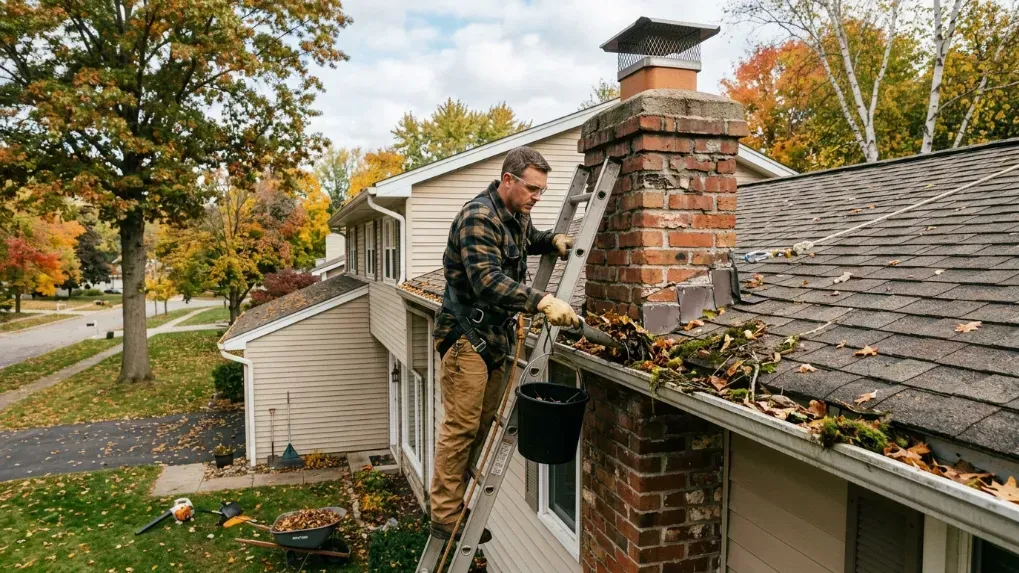
The wind coming off Casco Bay in January doesn't just cut through your coat. It attacks your masonry. If you own a home in Portland, specifically in the 04101 zip code or the historic West End, you know the drill. Rain turns to sleet, sleet turns to snow, and then it all melts and freezes again. It’s a brutal cycle.
Most homeowners ignore their chimney until a brick lands on the patio.
By then, it’s too late. The damage is done. Your chimney isn't just a smoke exhaust; it's a structural engine that keeps your home safe. But without professional intervention, Maine’s winter moisture will destroy it from the inside out. This isn't about aesthetics. It's about structural integrity. Here is why securing a professional chimney service for waterproofing is the smartest investment you can make this season.
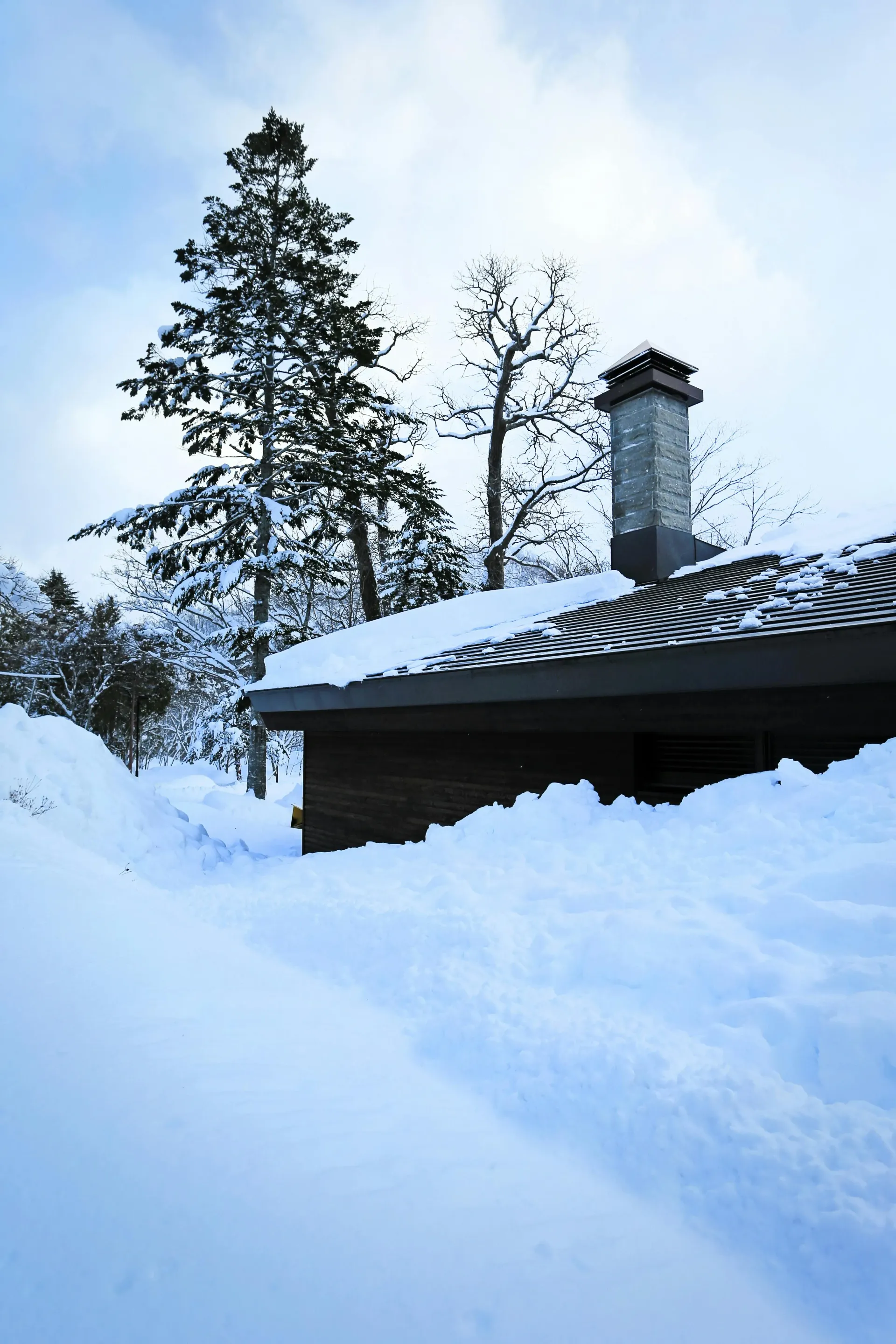
The Physics of Destruction: How Maine Winters Kill Chimneys
Let's talk science for a second. Masonry is porous. Bricks are essentially hard sponges. They absorb water.
In a climate like Arizona, this doesn't matter. In Portland, Maine, it matters more than anything else. When water enters a porous brick and the temperature drops below 32 degrees, that water freezes. Ice expands by about 9% volume. That expansion exerts massive hydraulic pressure on the masonry.
Pop. Crack. Crumble.
This is called the Freeze-Thaw Cycle. According to the
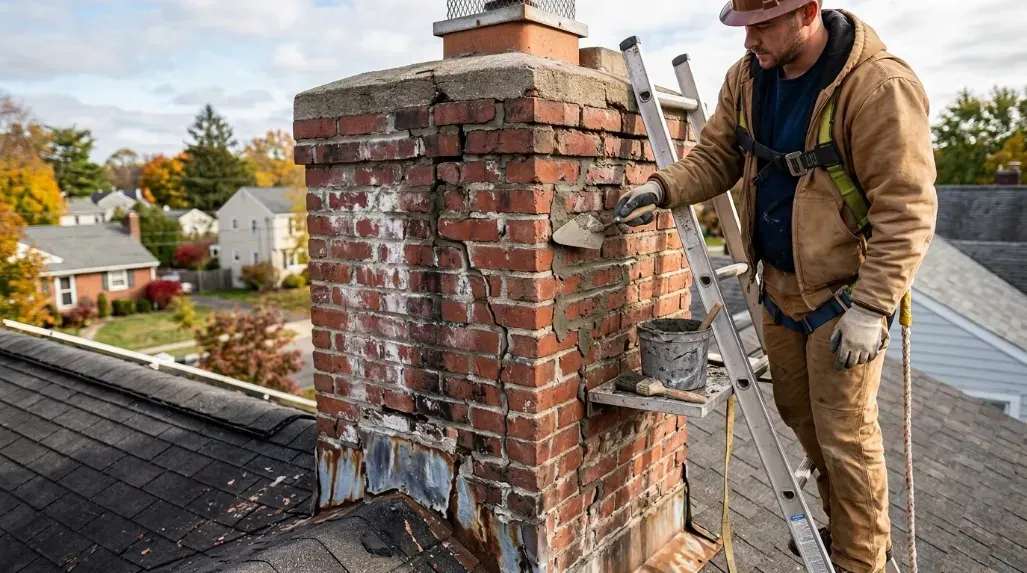
Chimney Safety Institute of America (CSIA), water penetration is the single greatest enemy of masonry chimneys. It causes spalling, where the face of the brick shears off. If you walk down Congress Street in the spring, look down. You’ll see red dust and brick shards. That is the sound of a chimney dying.
Why "Sealing" is a Dirty Word (And Waterproofing is the Hero)
There is a massive difference between "sealing" a chimney and waterproofing it. This distinction is where DIY attempts usually fail.
If you go to a hardware store and buy a generic silicone sealer, you are likely wrapping your chimney in plastic wrap. Sure, it keeps rain out. But it also traps internal moisture in. Your chimney breathes. Exhaust gases contain water vapor. If that vapor passes through the brick and hits a barrier of cheap sealant, it condenses, freezes, and destroys the brick face from behind.
Portland Chimney Service uses vapor-permeable waterproofing agents. These are polysiloxane compounds. Think of them like Gore-Tex for your house. They stop heavy rain from entering (hydrophobic) but allow microscopic water vapor to escape. This is the only way to survive a New England winter.
Signs You Need a Chimney Service Immediately
You don't need a ladder to spot trouble. You just need to look up. Scan your stack for these red flags:
Efflorescence: This is a white, powdery stain on the brick. It means water is moving through the masonry and depositing salts on the surface.- Spalling: As mentioned, bits of brick falling off.
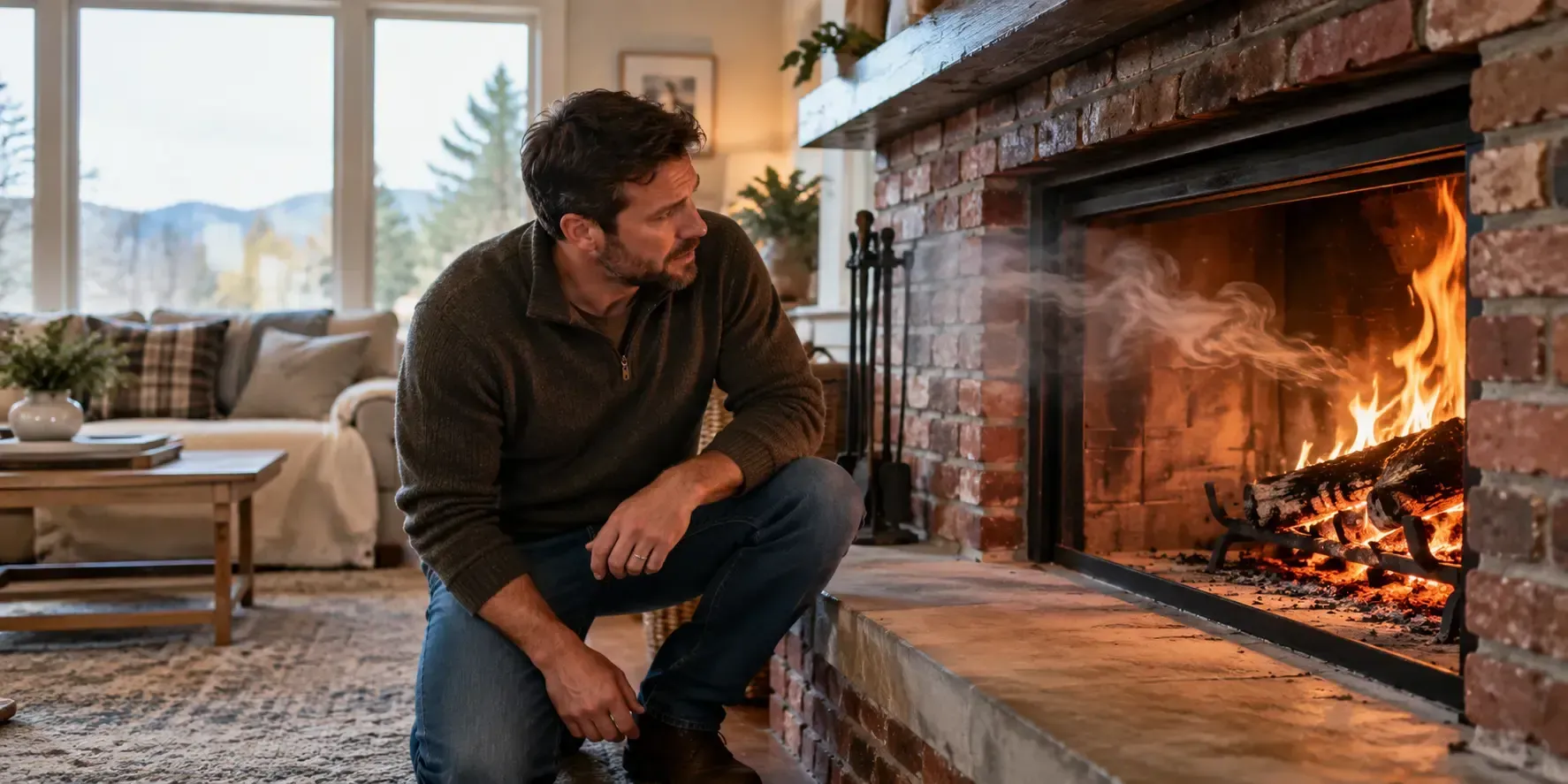
- Damp Smells: If your fireplace smells like a wet dog or a damp basement, you have water infiltration.
- Rusted Damper: Water dripping down the flue will rust out your steel components.
If you see these, do not wait for spring.
Masonry degradation accelerates exponentially. A small crack becomes a gaping hole in one season.
The Portland Chimney Service Protocol
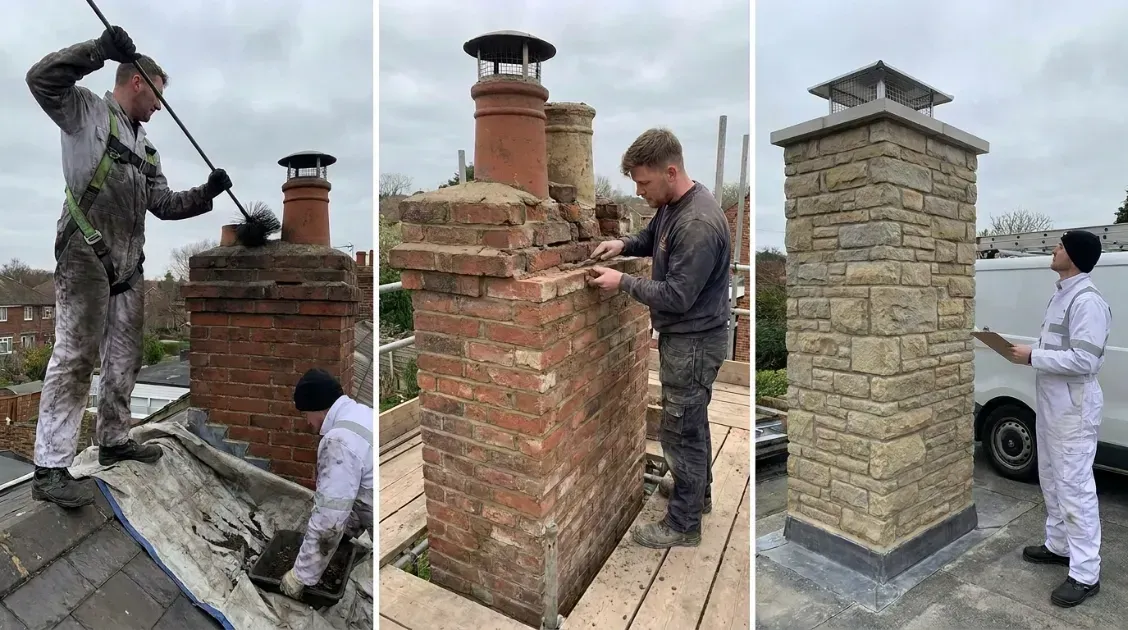
We don't just spray and pray. Our waterproofing service is a systematic preservation process tailored to the coastal climate.
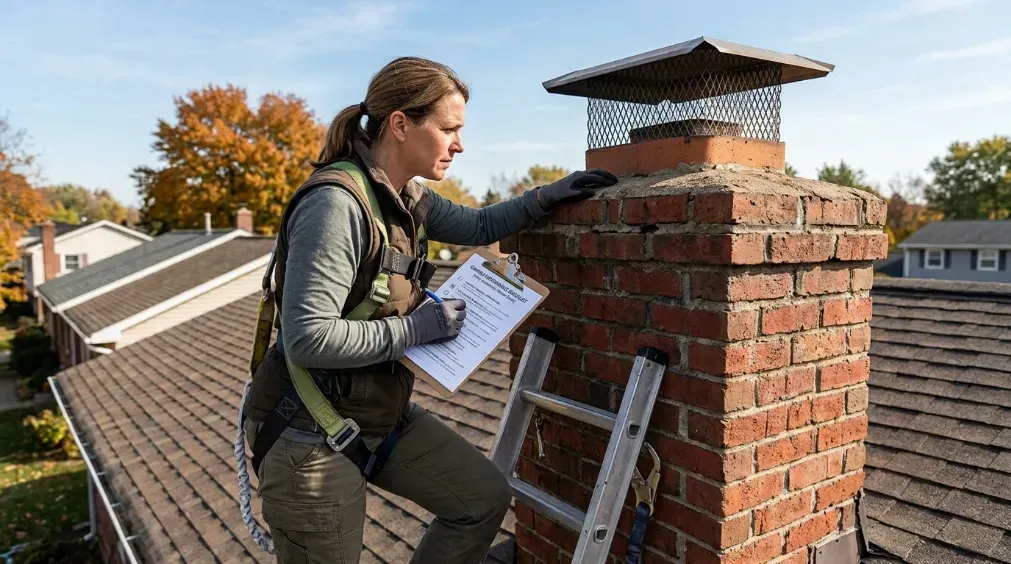
1. The Inspection & Prep
You cannot waterproof a dirty or broken chimney. It’s like waxing a car covered in mud. We scrub the masonry to remove mold, mildew, and creosote buildup. We check the mortar joints. If the mortar is receding (repointing needed), we fix that first. Waterproofing over a crack is useless.
2. The Crown Check
The chimney crown is the concrete slab at the very top. It’s the roof of your chimney. If this is cracked—and in Portland, it usually is—we repair it with a flexible, high-bond cement crown sealer.
3. The Application
We apply a professional-grade water repellent. We flood the surface. We ensure saturation. We want that chemical to penetrate deep into the substrate, usually 1/4 inch or more. This creates a hydrophobic zone that repels water for a decade.
Cost Analysis: Prevention vs. Rebuild
Let's be blunt about the money.
A high-quality waterproofing service might cost a few hundred dollars. A partial chimney rebuild? You are looking at thousands. A full tear-down and rebuild? That can run upwards of $10,000 depending on the height and access.
According to
HomeAdvisor, the national average for major chimney repairs spikes significantly when structural masonry is involved. Investing in prevention is not just cautious; it is financially essential.
Why Local Expertise Matters in 04101
A contractor from out of state doesn't understand the salt air. The humidity from the Atlantic Ocean accelerates corrosion and salt crystallization within the bricks (subflorescence). Portland Chimney Service has operated in this specific microclimate for years. We know that the brick used in an 1890s Victorian in the West End behaves differently than the brick in a 1980s build in North Deering.
We treat them differently.
Conclusion: Winter Wins If You Don't Act
The cold is coming. Actually, check your weather app—it’s probably already here. Your chimney is the highest point of your home, taking the brunt of every Nor'easter. Don't leave it defenseless.
Protect your investment. Preserve your home's history. Call
Portland Chimney Service. We deliver the chimney service Portland homeowners trust when the temperature drops.
Frequently Asked Questions
How often should I waterproof my chimney?
For Portland, ME climates, professional waterproofing typically lasts 5 to 10 years. However, we recommend a basic chimney inspection annually to check for physical damage or crown cracks that might compromise the waterproofing layer.
Can I apply waterproofer myself?
We advise against it. Hardware store sealers are often "film-formers" that trap moisture inside the brick, causing more damage than they prevent. Professional chimney service providers use vapor-permeable repellents that allow the masonry to breathe.
Is waterproofing the same as repairing a leak?
No. Waterproofing is preventative. It stops water from entering porous bricks. If you already have an active leak (water dripping into the firebox), you may need flashing repair, a new chimney cap, or masonry repointing before waterproofing can be applied.